
Billboards vs. Other Local Advertising Channels: Print, Radio, and More
There is no end to advertising options for local and national businesses.
Anything from traditional print ads to radio segments and even podcast appearances is available and offers countless opportunities to reach potential consumers in local communities. The catch is that not all channels deliver equal impact or the same return on investment (ROI).
When determining your advertising game plan and figuring out exactly where to put your next ad dollars, one important question to consider is how much of a splash you are looking to make.
If you want to maximize return on investment and reach the most profitable members of local communities, out-of-home (OOH) advertising may be the ad avenue for you. Before you make your final decision, it’s important to weigh the options and understand how billboards compare to other local advertising formats like print, radio, and more.
The Power of Billboards
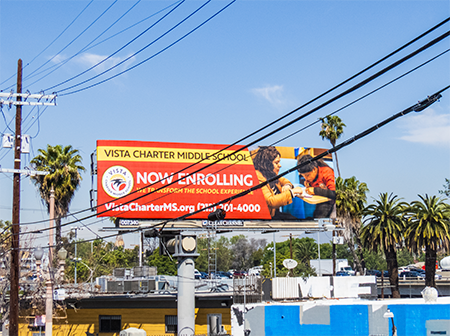
Billboards are one of the oldest forms of advertising, but have not weakened or faltered despite their long-standing status. OOH remains one of the most effective ways to spread messages and convert viewers into potential consumers. Billboards offer:
24/7 visibility
Unlike radio ads or newspaper placements, billboards are always on—day or night, rain or shine.
Massive reach
Placed along busy highways and bustling downtown centers, billboards deliver consistent impressions day after day.
No skip button
Digital campaigns face widespread ad blocker use and the “skip ad” button—one thing billboards do not have.
Cost efficiency
Billboards often outperform other local formats on a per-impression basis, saving money without sacrificing reach.
Billboards vs. Print Advertising
Print ads mean anything from being featured in the local paper to appearing in a magazine or on a flyer. This has long been a foundational staple for small businesses looking to interact with their local communities.
Credibility, and the ability to target specific audiences (such as a holistic wellness lifestyle magazine).
Readership across print formats is declining, and larger placements are costly—begging the question, is it even worth it?
Billboards vs. Radio Advertising
Radio advertising has historically been an incredibly effective way of reaching national audiences. Its reach has shrunk in the 21st century, yet it still offers unique advantages to one specific audience: commuters.
Showcasing a brand’s personality and repeatedly reaching the same commuters tuning into a given station while on the road.
Messages are fleeting—once the ad is over, it’s gone. Listeners are also turning to podcasts and streaming, a shift that has significantly decreased radio listenership.
Billboards vs. Geo-fenced Digital Ads
Digital advertising offers powerful results and even allows a message to be confined to a given area and tailored towards a carefully chosen audience.
Advanced targeting, retargeting features, and data showing how an audience interacts with a campaign.
Ad fatigue among digital users, the rise of ad blockers, and widespread negative consumer sentiment towards ads.
The Sweet Spot
It doesn’t have to be billboards vs. other advertising channels. The best campaigns use billboards as a messaging pillar while layering in other complementary ad channels.